
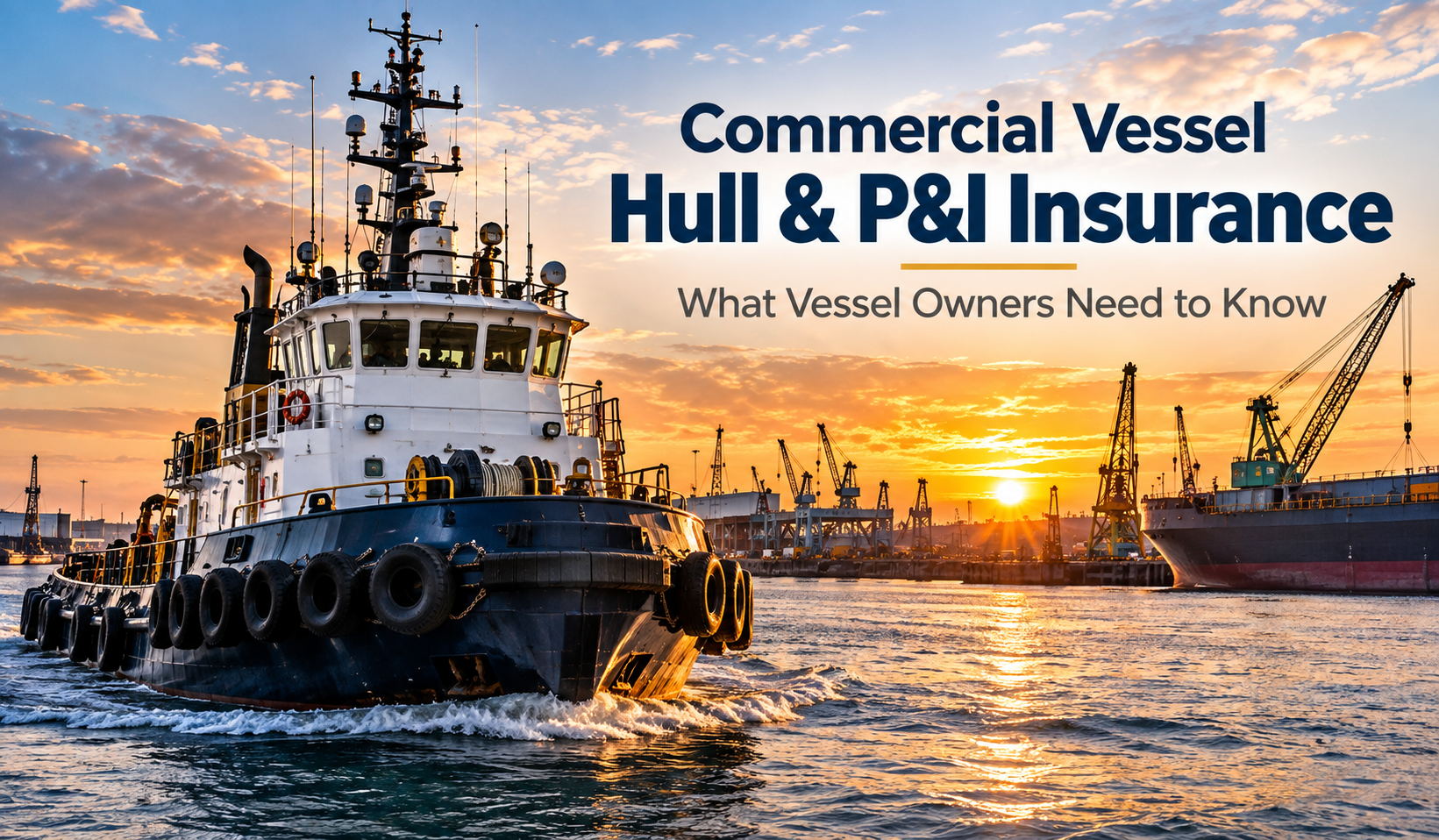
Commercial Vessel Hull & P&I Insurance
Commercial vessels operate in an environment where physical damage, operational liability, crew exposures, contractual responsibilities, and third-party risks can overlap quickly. For vessel owners and marine operators, understanding how Hull insurance and Protection & Indemnity coverage work together is an important part of building a comprehensive marine insurance program.
A serious marine loss can involve much more than damage to the vessel itself. A collision, grounding, machinery failure, crew injury, or other incident may create physical damage while simultaneously involving another vessel, docks, cargo, employees, environmental exposures, or third parties.
Hull Insurance and P&I Address Different Sides of Vessel Risk
Commercial Hull insurance generally focuses on physical loss or damage to the insured vessel and its machinery or equipment, subject to the policy terms and conditions. Protection & Indemnity insurance — commonly referred to as P&I — generally addresses certain liability exposures arising from vessel ownership and operation.
Neither should be viewed in isolation. Together, Hull and P&I can form important parts of a broader commercial marine insurance program.
What Does Commercial Hull Insurance Cover?
A commercial vessel can represent one of the most significant assets within a marine operation. Damage caused by collision, grounding, heavy weather, machinery incidents, fire, or other covered causes of loss can create substantial repair costs and operational disruption.
Commercial Hull insurance is designed to protect the physical vessel, subject to the specific policy form, exclusions, deductibles, valuation method, navigation limits, and other terms.
The insured value of the vessel is particularly important. Equipment upgrades, major repairs, changing market conditions, and replacement costs can affect whether the value shown on an existing policy continues to accurately reflect the vessel and the owner’s financial exposure.
What Is Protection & Indemnity Insurance?
While Hull coverage is primarily concerned with the vessel itself, Protection & Indemnity insurance addresses many of the liability exposures that can arise from owning and operating that vessel.
P&I coverage can be particularly important because marine liability claims may involve multiple parties, specialized maritime law, contractual responsibilities, medical expenses, damage to third-party property, and significant legal defense costs.
Commercial Vessel Operations May Include
Tugboats & Towboats • Barges • Workboats • Crew & Supply Vessels • Passenger Vessels • Research & Specialty Vessels • Marine Construction Vessels • Commercial Fishing Vessels and other commercial marine operations.
The Vessel Type Is Only Part of the Risk
Two vessels of similar size and value can present very different risk profiles depending on how and where they operate. Underwriters often look beyond the vessel itself to understand the complete operation.
Navigation territory, vessel age, machinery, crew experience, loss history, contractual responsibilities, cargo, towing operations, and the nature of the work being performed can all influence how a commercial marine insurance program should be structured.
Changes to the operation also matter. New contracts, customers, territories, equipment, vessel uses, or services can materially change an organization’s risk even when the vessel itself has not changed.
Hull vs. P&I: Two Coverages, One Connected Risk
Hull insurance is primarily focused on covered physical loss or damage involving the vessel, machinery, and insured equipment. P&I insurance is primarily focused on certain third-party and operational liability exposures associated with owning and operating the vessel.
A single marine incident may involve both. For example, a collision could damage the insured vessel while also causing damage to another vessel, cargo, docks, or other property and potentially involve injuries or additional liability exposures.
MARINE COVERAGE REVIEW:
Hull and P&I should be reviewed together as part of the vessel owner’s broader operation. Vessel value, navigation territory, vessel use, crew exposure, contracts, liability limits, and related business operations can all affect the insurance program.
Important Areas Vessel Owners Should Review
Marine insurance is highly dependent on individual operations and policy language. Reviewing the details of the vessel and the business surrounding it can help identify potential gaps before a claim occurs.
Marine Risk Rarely Stops at the Waterline
Vessel owners often have additional exposures that extend beyond Hull and P&I. Depending on the operation, a complete insurance review may also involve commercial marine facilities, property, pollution liability, cargo, inland marine, equipment, commercial auto, workers’ compensation, excess liability, or other specialized coverages.
This becomes particularly important for marine businesses operating docks, terminals, repair facilities, yards, or multiple vessels. Looking at each policy independently can make it easier to overlook the way one exposure connects to another.
Commercial Marine Facilities
Shipyards, terminals, stevedores, ship repairers, wharfingers, and other waterfront operations can face specialized property and liability exposures beyond the vessels themselves. These operations may require a broader marine insurance approach designed around both the facility and the work being performed.
Questions Worth Asking Before Your Next Renewal
Has the vessel’s value changed? Have you added new equipment or completed major upgrades? Has the vessel begun operating in new territories or performing different work?
Have contracts or customer requirements changed? Are current liability limits still appropriate for the operation? Have additional vessels, facilities, employees, or services been added since the insurance program was originally structured?
Most importantly, do the Hull, P&I, property, pollution, workers’ compensation, excess, and other policies still work together as one coordinated risk management program?
Commercial Marine Insurance Built Around the Operation
There is no single insurance program that fits every vessel owner or marine business. A tug operator, shipyard, marine contractor, terminal operator, and commercial workboat owner may all face very different combinations of physical, operational, contractual, and liability risk.
A useful commercial marine insurance review starts with understanding the operation itself — the vessels, people, work being performed, customers, contracts, navigation territory, facilities, equipment, and potential severity of a loss.
Review Your Commercial Vessel Insurance Program
Harper Kranz works with commercial vessel owners, marine operators, contractors, and waterfront businesses to understand their operations and evaluate insurance solutions around their individual risks.
If your operation has changed, your fleet has grown, or you simply want another look at your current Hull and P&I program, a coverage review can help identify questions worth addressing before the next renewal.
IMPORTANT:
Insurance coverage varies by insurer, policy form, endorsements, exclusions, limits, deductibles, and the individual risk. This article is provided for general informational purposes only and does not constitute insurance, legal, or risk management advice. Coverage should be reviewed with a qualified insurance professional based on the specific operation.